English
 Italian
Citrus bioflavonoids and vitamin C: a natural synergy
The association between citrus bioflavonoids (in particular hesperidin, diosmin, naringenin, rutin, and quercetin) and vitamin C (ascorbic acid) produces a synergistic effect that includes:
• enhancement and prolongation of antioxidant activity;
• protection of collagen and the microcirculation;
• reduction of inflammation and capillary permeability;
• improvement of the biological effectiveness of vitamin C.
From a historical and conceptual perspective, bioflavonoids were initially referred to as “vitamin P,” as it was observed that vitamin C exerted an incomplete effect on capillary permeability and vascular fragility in their absence. Subsequent studies clarified that the relationship between vitamin C and bioflavonoids is not simply additive, but functionally interdependent.
One of the main mechanisms underlying this synergy involves antioxidant activity. Vitamin C is a powerful water-soluble antioxidant, capable of neutralizing free radicals and reactive oxygen species; however, during this process it is rapidly oxidized. Citrus bioflavonoids are able to regenerate oxidized ascorbic acid, restoring it to its biologically active form. This regeneration cycle prolongs and stabilizes the overall antioxidant action, ensuring more effective protection of cells and tissues, especially under conditions of chronic inflammation and oxidative stress.
A second key area concerns the protection of collagen and the microcirculation. Vitamin C is essential for collagen synthesis, as it acts as a cofactor for enzymes involved in the hydroxylation of proline and lysine. Bioflavonoids, in parallel, inhibit degradative enzymes such as hyaluronidase, collagenase, and elastase, thereby protecting the extracellular matrix. The synergistic effect results in increased capillary resistance, reduced vascular permeability, and a decrease in edema and tissue fragility—effects that are well documented at the vascular and microcirculatory levels.
The synergy also extends to anti-inflammatory activity. Vitamin C helps modulate the immune response and reduce the activation of major pro-inflammatory pathways (such as NF-κB), while citrus bioflavonoids reduce the production of inflammatory cytokines (TNF-α, IL-1β, IL-6) and lipid mediators such as prostaglandins and leukotrienes. Together, they promote a more balanced reduction of inflammation, limiting tissue damage without suppressing immune defenses.
A further element of synergy involves the bioavailability of vitamin C, namely the amount of vitamin C that is actually absorbed, distributed, and utilized by the body. It has in fact been shown that bioflavonoids improve the intestinal absorption of ascorbic acid and reduce its excretion, thereby increasing plasma and tissue concentrations. This explains why vitamin C taken through flavonoid-rich foods (such as citrus fruits) or in combination with them is more effective than isolated vitamin C.
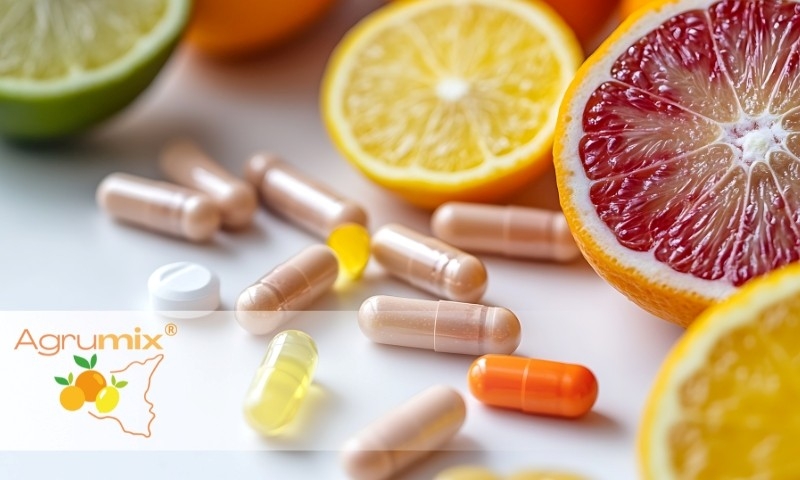
Agrumix® is the flagship of the Amunì® line, a unique blend that brings together the best of Sicilian citrus fruits – Tarocco red orange, mandarin, and Etna lemon.
This phytocomplex, standardized to 50% vitamin C, is an exclusive extract whose combination, in addition to a high vitamin C content, guarantees the presence of bioflavonoids.
Agrumix® is an ingredient developed to meet the growing demand for natural and functional formulations in the nutraceutical field: its integration makes it possible to formulate high value-added products, characterized by a synergistic pool of bioactive nutrients, capable of combining the excellence of Sicilian citrus-growing tradition with technological innovation.