English
 Italian
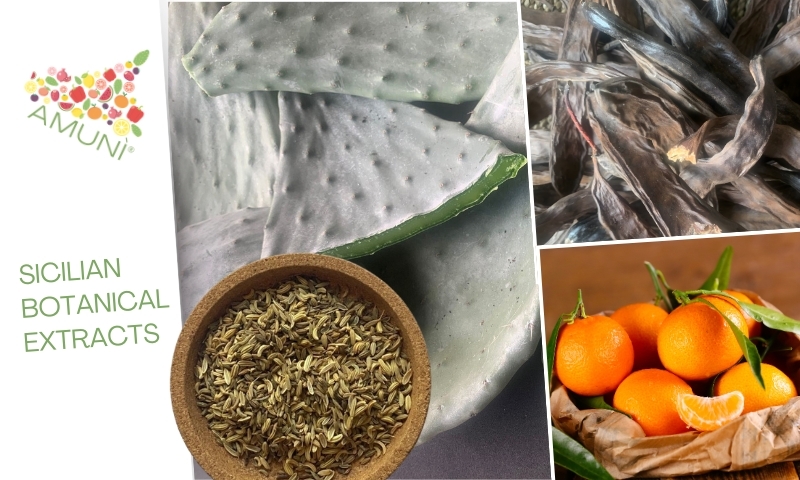
From the tradition of Sicily: the powerful natural synergy of nopal, carob, fennel seeds and mandarin in the control of gastric hyperacidity
Gastric hyperacidity is a condition characterized by excessive production of hydrochloric acid or by particular sensitivity of the gastric mucosa to physiological acidity. It manifests as epigastric burning, pain, a feeling of heaviness, acidity and sometimes reflux, often related to stress, poor diet or functional alterations of digestion. In uncomplicated forms, the main objective is to protect the gastric mucosa and restore physiological digestive balance, rather than drastically suppress acid secretion.
In this context, the combination of nopal, carob, fennel and mandarin represents a natural and harmonious approach, capable of acting on multiple levels: mucosal protection, modulation of acidity, reduction of bloating and support of overall well-being, including at a mental level.
Nopal (Opuntia ficus-indica) represents the central and most distinctive element of the combination, thanks to its numerous beneficial properties at the gastrointestinal level. It is particularly rich in mucilages, complex polysaccharides and soluble fibers, substances that, upon contact with gastric fluids, hydrate and form a viscous gel. This gel adheres to the stomach wall, creating a mechanical protective barrier that reduces direct contact between the mucosa and hydrochloric acid, thereby alleviating burning, pain and irritation.
In addition to its protective action, nopal exerts a soothing and reparative effect on the gastric mucosa. Its components promote an environment more suitable for the natural regeneration processes of the epithelium, proving useful in cases of functional gastritis or gastric hypersensitivity.
Furthermore, nopal helps modulate gastric emptying and reduce intestinal fermentations, factors that can amplify hyperacidity.
Another relevant aspect is nopal’s ability to bind irritating substances and modulate the absorption of fats and sugars, reducing the overall digestive load. This of digestion indirectly contributes to decreasing reflex acid stimulation.
Carob pulp (Ceratonia siliqua) plays a significant role in controlling disorders related to gastric hyperacidity, thanks to a combination of soothing, protective and mildly alkalizing properties. Like nopal, carob pulp is rich in soluble fibers and polysaccharides which, upon contact with gastric juices, form a viscous gel capable of gently coating the stomach mucosa. Thanks to its content of alkalizing minerals, such as potassium, calcium and magnesium, carob pulp also exerts a buffering effect, modulating excess acidity and contributing to the maintenance of acid-base balance. In this way, it can reduce episodes of reflux and burning without compromising physiological digestion. Soluble fibers promote more regular gastric emptying and improve the consistency of intestinal contents, limiting fermentations and bloating that may worsen symptoms. The pulp is also easily digestible and naturally sweet, making it particularly suitable for individuals with sensitive digestion or a tendency toward post-meal heaviness.
Wild fennel seeds (Foeniculum vulgare) help control disorders associated with gastric hyperacidity mainly through their carminative, antispasmodic and digestive actions. The essential oils contained in the seeds (anethole, fenchone, limonene) promote the elimination of gas, reduce bloating and abdominal tension, and relax the smooth muscles of the gastrointestinal tract, improving gastric motility and stomach emptying. In addition, they gently stimulate digestion without irritating the gastric mucosa, relieving post-prandial heaviness and cramps. In summary, fennel seeds do not directly reduce acidity, but contribute to greater digestive comfort by alleviating the functional symptoms of hyperacidity.
Mandarin (Citrus reticulata Blanco) supports digestion, acid-base balance and mental well-being. From a digestive perspective, its organic acids gently stimulate the secretion of gastric juices, promoting more efficient digestion and reducing the sensation of post-meal heaviness, while soluble fibers (pectins) modulate gastric emptying and intestinal transit, limiting fermentations, bloating and abdominal tension. Once metabolized, these acids leave alkaline residues, giving mandarin an alkalizing effect that supports the body’s acid-base balance. At the same time, its aromatic essential oils, such as limonene and linalool, together with vitamin C and flavonoids, exert a relaxing and mood-enhancing action, promoting calmness, stress reduction and mental well-being—important elements, as stress can aggravate hyperacidity. In summary, mandarin harmonizes digestion, modulates gastric acidity and promotes a state of physical and mental comfort, making it a valuable natural ally in the management of hyperacidity.
Overall, this combination acts in a synergistic and gentle manner: nopal protects the mucosa, carob modulates acidity and digestion, fennel reduces bloating and abdominal tension, while mandarin supports acid-base balance and mental well-being. The result is a natural support particularly indicated in mild and moderate forms of gastric hyperacidity, especially when stress plays a significant role.
Within its line of ingredients, obtained from premium raw materials, Amunì® makes the following selected products available to ensure maximum effectiveness:
 is a powder composed 100% of Sicilian carob, with a distinctive flavor reminiscent of cocoa.
The production of carob powder is a technologically controlled process that allows targeted modulation of the sensory and functional characteristics of the final product. The raw material consists of mature Ceratonia siliqua pods, carefully selected to guarantee quality, integrity and absence of contamination. Processing of the pulp produces a fine and naturally sweet powder. Roasting is the key stage of the process, as the regulation of temperature and time determines its sensory profile: light roasting preserves sweet notes and a light color; medium roasting intensifies aroma and color; darker roasting produces deeper tones and roasted notes, reducing sweetness. At the end of roasting, the material is rapidly cooled and then ground to obtain the desired particle size.
Thanks to this technological versatility, carob powder can be used in multiple applications, from traditional food industry products to functional and nutraceutical formulations.
 is a powder composed 100% of wild fennel seeds cultivated in Sicily, characterized by a sweet flavor similar to anise.
The production of Foeniculum vulgare powder through micronization is a process aimed at obtaining a very fine, aromatic product rich in active compounds, while preserving its natural properties.
The process involves preliminary grinding of the seeds to reduce them into smaller fragments. These fragments then enter the actual micronization phase, carried out using high-energy or jet mills, which reduce the particles to microscopic size. During this stage, speed, pressure and temperature are carefully controlled to prevent overheating and preserve essential oils and volatile aromatic compounds. The micronized powder is then sieved to standardize particle size and remove any coarser particles. The result is a fine wild fennel powder, highly aromatic and soluble, ideal for food, nutraceutical and phytotherapeutic applications.
Nopal juice powder is obtained from the juice extracted from prickly pear cladodes grown on Mount Etna.
The juice of Opuntia ficus-indica cladodes is transformed into powder through spray-drying technology, after being mixed with the carrier maltodextrin to improve particle formation and the solubility of the final product. The juice is then sprayed into a drying chamber through atomizers, while hot air rapidly evaporates the water contained in the droplets, transforming them into dry particles. Temperature and atomization speed are precisely controlled to preserve vitamins, polyphenols and other heat-sensitive compounds. The result is a water-soluble product, ideal for nutritional supplementation, food preparations and functional formulations.
Mandarin juice powder is obtained through the same spray-drying process, starting from concentrated Sicilian mandarin juice. In this powdered form, the fruit’s nutritional components are effectively preserved. The product is entirely natural, free from added flavorings, colorings and preservatives.
Through rigorous selection of raw materials of Sicilian origin, a traceable supply chain and innovative production processes, Amunì® develops products that meet the growing demands for quality, well-being and sustainability in the global market. In a constantly evolving sector, Amunì® aims to position itself as a reliable partner for those who aspire to combine tradition, science and concrete results in modern nutraceuticals.