English
 Italian
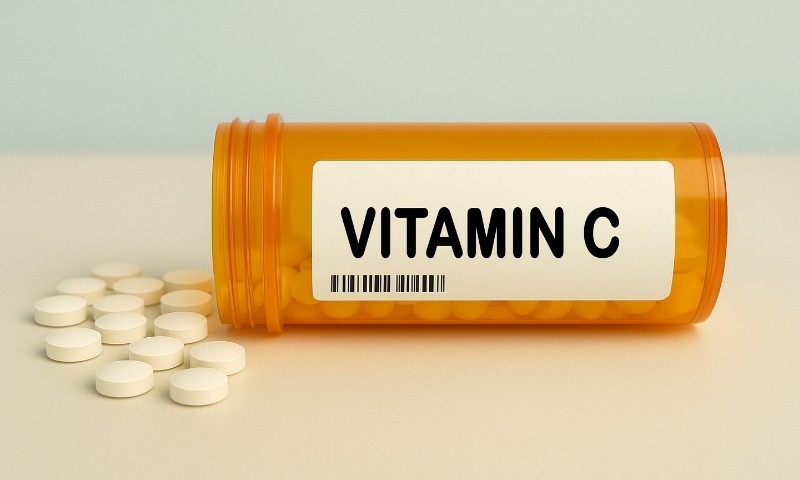
Pharmacokinetic rationale for fractionated high-dose vitamin C administration
Vitamin C plays a crucial role in numerous biological processes, including collagen synthesis, modulation of the immune response, neurotransmitter biosynthesis, and antioxidant defense. Since humans have lost the ability to synthesize it endogenously, dietary intake is essential. Although the recommended daily requirement is relatively low, significantly higher doses are frequently used in conditions of increased oxidative stress or for nutritional supplementation. However, intestinal absorption and systemic retention of vitamin C are limited by specific sodium-dependent transporters and by rapid renal clearance.
Mechanisms of intestinal absorption
Absorption of ascorbic acid occurs predominantly in the proximal small intestine via the sodium-dependent transporter SVCT1, which is characterized by high affinity but limited capacity. This transport system follows saturable kinetics, whereby absorption efficiency decreases as the single oral dose increases. Pharmacokinetic studies have shown that while doses below 200 mg achieve near-maximal tissue saturation, high single doses (≥500–1000 mg) result in a significant reduction in the absorbed fraction, with an increase in the non-bioavailable portion.
Dividing the total daily dose into multiple administrations (e.g., 250 mg four times daily) allows each dose to remain below the saturation threshold of intestinal transporters, thereby improving overall net absorption.
Systemic distribution and plasma homeostasis
Once absorbed, vitamin C is rapidly distributed to tissue compartments, with particularly high accumulation in leukocytes, the adrenal glands, and the central nervous system. However, tissue storage capacity is limited and plasma concentration is tightly regulated. Beyond a saturation threshold (~70–80 µmol/L), increased oral intake does not result in a proportional rise in plasma concentrations.
Vitamin C has a relatively short half-life, and its homeostatic regulation is strongly dependent on renal excretion. A single high dose induces a rapid plasma peak followed by equally rapid urinary elimination. In contrast, fractionated administration maintains more stable plasma concentrations over time, ensuring continuous availability for ascorbic acid–dependent cellular functions.
Renal elimination and functional bioavailability
Vitamin C is eliminated primarily via the kidneys through glomerular filtration and saturable tubular reabsorption. When plasma concentrations exceed reabsorptive capacity, the excess is rapidly excreted in urine. This mechanism limits the biological effectiveness of high single doses, promoting micronutrient wastage.
Fractionated dosing reduces acute of the renal threshold, thereby increasing functional bioavailability, defined as the proportion of vitamin C effectively utilized by tissues.
Gastrointestinal tolerability
Intake of high single doses of vitamin C is associated with increased intraluminal intestinal osmolarity, resulting in a higher risk of osmotic diarrhea and gastrointestinal discomfort. Dividing the daily dose reduces the amount of unabsorbed ascorbic acid in the intestinal lumen, improving tolerability and compliance, particularly in long-term supplementation protocols.
Clinical and nutritional implications
Under conditions of increased vitamin C turnover—such as cigarette smoking, infections, chronic inflammation, oxidative stress, and intense physical activity—administration distributed over time appears physiologically more consistent with continuous tissue utilization. This strategy minimizes plasma fluctuations and maximizes supplementation efficiency.
Conclusions
Pharmacokinetic and physiological evidence indicates that fractionated administration of 1000 mg/day of vitamin C represents a superior approach compared with a single daily dose. This regimen optimizes intestinal absorption, stabilizes plasma concentrations, reduces urinary excretion, and improves gastrointestinal tolerability. Dose splitting should therefore be considered the preferred method for high-dose vitamin C intake.
References
- Levine M., Conry-Cantilena C., Wang Y. et al. Vitamin C pharmacokinetics in healthy volunteers: evidence for a recommended dietary allowance. PNAS, 1996.
- Levine M., Rumsey S.C., Daruwala R. et al. Criteria and recommendations for vitamin C intake. JAMA, 1999.
- Institute of Medicine. Dietary Reference Intakes for Vitamin C, Vitamin E, Selenium, and Carotenoids. National Academies Press, 2000.
- EFSA Panel on Dietetic Products, Nutrition and Allergies. Dietary Reference Values for vitamin C. EFSA Journal, 2013.
- Padayatty S.J., Levine M. Vitamin C: the known and the unknown and Goldilocks. Oral Diseases, 2016.