English
 Italian
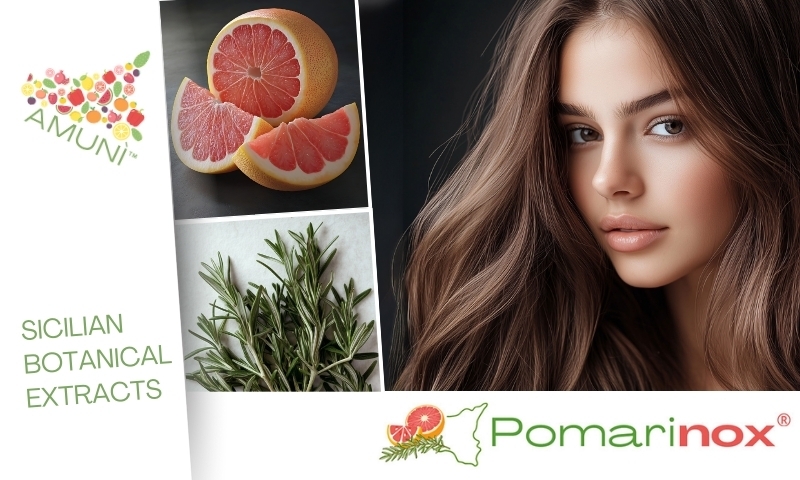
Rosemary and pink grapefruit for healthy and strong hair
Rosemary leaf extract is an ingredient that offers a great amount of benefits for the scalp, including its ability to promote hair growth and treat certain forms of hair loss.
The main chemical compounds in rosemary extract are α-pinene, 1,8-cineole, camphor, rosmarinic acid, carnosic acid, and borneol.
In recent years, there has been a lot of buzz around this plant, as rosemary's ability to stimulate scalp health and promote hair growth is well-documented.
One possible mechanism by which rosemary leaf extract stimulates hair growth is by increasing blood circulation to the scalp. Some studies show that rosemary improves circulation, likely by stimulating the cells lining blood vessels (endothelial cells) and facilitating platelet movement. By improving circulation in the scalp, rosemary leaf extract can stimulate hair follicles and promote faster hair growth. Vasodilators like rosemary can also reduce hair loss by ensuring that new hair is thick, healthy, and well-rooted in the scalp.
Numerous studies suggest that serums, conditioners, and shampoos containing rosemary oil or rosemary leaf extract can stimulate hair growth in people with relatively healthy scalps. Furthermore, an increasing amount of research indicates that rosemary may be able to treat hair loss and encourage new hair growth in people with androgenetic alopecia.
The mechanisms by which rosemary can treat hair loss depend on the type of hair loss in question, or rather, its underlying cause.
Let's look at some of the most common causes of hair loss and how rosemary can help regrowth in each case:
Androgenetic Alopecia
Androgenetic alopecia (male or female baldness) is believed to be caused by an androgen (a hormone that causes the development of male physical characteristics), called dihydrotestosterone or DHT.
An enzyme called 5-alpha-reductase converts testosterone into DHT and is directly responsible for the amount of circulating DHT in the blood. Androgenetic alopecia occurs when excess DHT binds to receptors in hair follicles, causing them to shrink and ultimately disrupt their function.
A 2015 study attempted to measure the effect of rosemary extract as an alternative treatment for people with androgenetic alopecia, and the results were extremely positive. Researchers treated one group of subjects with a topical formulation of rosemary, and the second group with the conventional hair loss treatment: minoxidil.
After six months of treatment, both patient groups experienced significant hair regrowth in previously bald areas of the scalp. Rosemary leaf extract was found to be as effective as conventional medical treatment. Additionally, people treated with rosemary experienced much less scalp irritation due to the regrowth.
Before this 2015 study, a clinical review had highlighted rosemary as a potential treatment for androgenetic hair loss. This review focused on rosemary oil rather than rosemary leaf extract, but the results were equally positive.
Rosemary is believed to treat male and female baldness by blocking the precursor of DHT, 5-alpha-reductase. In the study mentioned, topical treatment with rosemary leaf extract reduced the activity of this enzyme by up to 94.6%.
Alopecia Areata
Alopecia areata is an autoimmune form of hair loss that occurs when the immune system becomes hyperactive and starts attacking the body's tissues, particularly the hair follicles. As a potent anti-inflammatory, rosemary leaf extract can treat autoimmune hair loss by reducing inflammation around the hair follicles.
Telogen Effluvium
Telogen effluvium is an extremely common form of hair loss that occurs when the hair growth cycle shortens, causing excessive shedding. This condition can develop following periods of trauma or psychological stress and is often caused by stress-induced inflammation. Telogen effluvium is reversible and can be improved with regular use of products containing rosemary leaf extract, which is designed to reduce inflammation of the scalp.
Scalp Folliculitis
Scalp folliculitis is characterized by excessive growth of Staphylococcus Aureus, a bacterium naturally present on a healthy scalp. When this condition occurs, the bacteria penetrate the scalp through a wound or open hair follicle, causing irritated and inflamed bumps and increased hair loss.
Rosemary contains camphor, an antibacterial compound. Topical application of formulations containing camphor has been shown to treat scalp folliculitis by eliminating the bacterial overgrowth underlying the condition. If you suffer from scalp folliculitis and consequently have excessive hair loss, using scalp and hair care products containing rosemary leaf extract can heal your scalp and promote natural hair regrowth.
Scalp Psoriasis and Seborrheic Dermatitis
In psoriasis and seborrheic dermatitis, hair loss is accelerated by both scratching and excessive fungal growth on the scalp. A 2017 study shows that rosemary extract can be an effective antifungal agent, making it a potential treatment for hair loss caused by these conditions.
When it comes to natural remedies for hair care, another very promising fruit is pink grapefruit, which, in addition to numerous health benefits, is very useful for natural hair growth. The richness in nutrients, antioxidants, and collagen-stimulating properties makes pink grapefruit an extraordinary ally for achieving lush and shiny hair.
Pink grapefruit extract has several properties:
-
it is a natural strengthening agent for hair fibers. Thanks to its invigorating virtues, it brings vitality to dull hair. In fact, the active ingredients in it deeply strengthen the hair and prevent hair loss.
-
it helps stimulate microcirculation. Due to its content of vitamins A and C, it aids in stimulating hair growth and the health of the follicles. These follicles are nourished by nutrients and oxygen from the blood. When blood flow is sufficient, hair grows more, becoming thicker and more voluminous.
-
thanks to its vitamin E content, it helps the hair and scalp maintain hydration.
-
it is renowned for lightening hair and enhancing natural highlights. Pink grapefruit extract can be used in certain treatments like conditioners. In fact, it makes the hair healthy and shiny without weighing it down.
-
it promotes the general health of the scalp by relieving dryness and eliminating dandruff. This plant extract rebalances or stabilizes the scalp's microbiome due to an imbalance of bacteria and yeasts. Furthermore, this active ingredient has hydrating and nourishing properties that help control dandruff.
-
pink grapefruit extract reduces breakage: The antioxidants it contains neutralize free radicals and protect the hair from damage. Additionally, this active ingredient helps prevent hair loss and graying.
Pomarinox® is a dry extract made from pink grapefruit and rosemary grown in Sicily, standardized in rosmarinic acid and bioflavonoids.
Thanks to the synergy between its components, Pomarinox® presents an optimized nutritional profile for both the cosmetic and nutraceutical industries as well as those operating in the functional food and beverage sector, looking to offer premium products.
Pomarinox® is positioned as a key ingredient to meet the growing demand for natural products, enriched with powerful nutrients: by including it in formulations, a distinctive product can be created that responds to market needs with an ingredient of the Amunì® line that combines the best of Sicilian citrus tradition with innovation.